

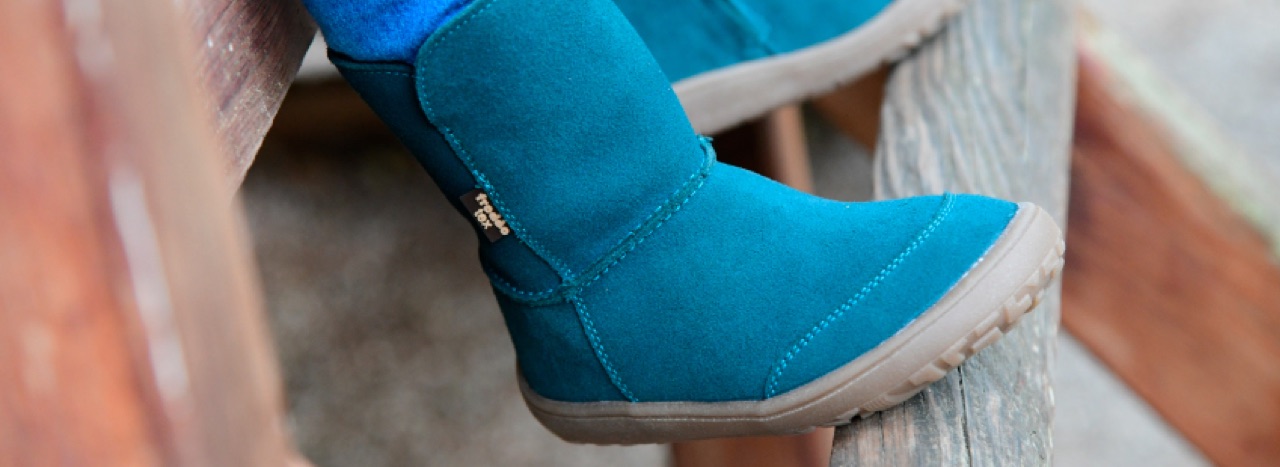
Good winter shoes should keep a child’s feet warm, allow natural movement, and suit the actual winter conditions. When choosing a pair, consider not only insulation but also size, sole grip, moisture protection, and the child’s activity level.
Warmer is not always better
Very thick insulation does not automatically mean greater comfort. If the shoe is too tight, there is very little air space inside, and the foot can actually feel colder.
Winter footwear should provide enough room for the toes and a warm sock without being excessively large.
Getting the winter size right
Measure both feet before buying. Consider the internal length of the specific model and the appropriate amount of extra space.
Avoid buying winter boots several sizes too large “to grow into.” Oversized shoes can fit poorly and make walking and running less stable.
Protection from snow and moisture
For wet snow and slush, materials that help limit moisture entering the shoe are especially useful.
Check the model description carefully. Water-repellent treatments, membranes, and other forms of moisture protection can vary significantly between models.
Sole and grip
Winter surfaces can be slippery, so tread design matters.
A more pronounced tread usually provides better grip on snow and uneven ground.
Boot height
Higher boots can help keep snow from getting inside, especially during active outdoor play.
At the same time, the shoe should still allow the child to flex the foot and move without unnecessary weight.
For kindergarten and school
Easy fastening is especially important when a child needs to change shoes independently.
Hook-and-loop straps and other simple fastening systems are often more practical than complicated lacing.
The best winter shoe is not necessarily the heaviest or most insulated one. It is the pair that fits the child’s foot, size, and actual winter conditions.