

Two children with the same foot length can feel completely different in the same shoe model. The reason is often foot width, toe shape, or instep volume.
Why is length alone not enough?
Shoe size is usually associated mainly with length, but fit also depends on shape.
If the foot is wide, a narrow model can press on the sides and toes. If the foot is narrow, a high-volume shoe may not hold the foot securely.
How can you tell if a shoe is too narrow?
Pay attention to the child’s feedback and how the shoe looks and feels after fastening.
Signs of a shoe being too narrow can include pressure on the toes, noticeable red marks after wear, or a feeling that the sides of the foot are being squeezed.
How can you tell if a shoe is too wide?
If the foot moves constantly inside the shoe, the heel slips, or the fastenings have to be tightened to their limit, the model may be too roomy.
This can make confident movement more difficult.
Toe-box shape
Many children are more comfortable in models with a wider front, particularly if their toes naturally spread more broadly.
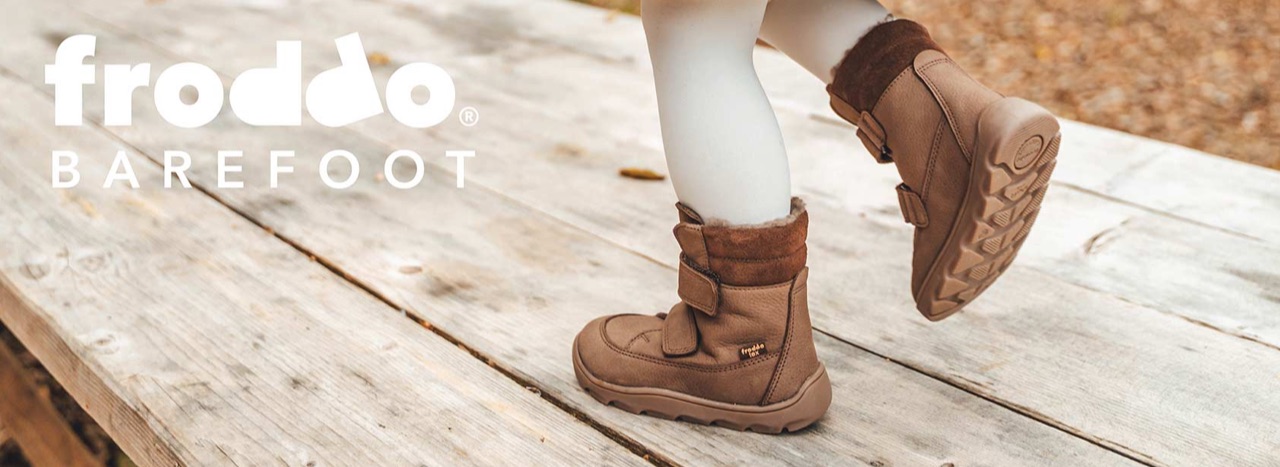
Barefoot models often offer a more anatomical toe shape, although fit can still vary between models.
Instep volume matters too
A child may have a higher or lower instep. This means two shoes with the same length and width can still feel very different.
Adjustable straps and laces can help fine-tune the fit.
How do you choose online?
When buying online, measure both feet and read the description of the specific model carefully.
If information about width, volume, or last shape is provided, take it into account.
A well-fitting shoe should stay securely on the foot, avoid squeezing the toes, and provide enough room for natural movement.