

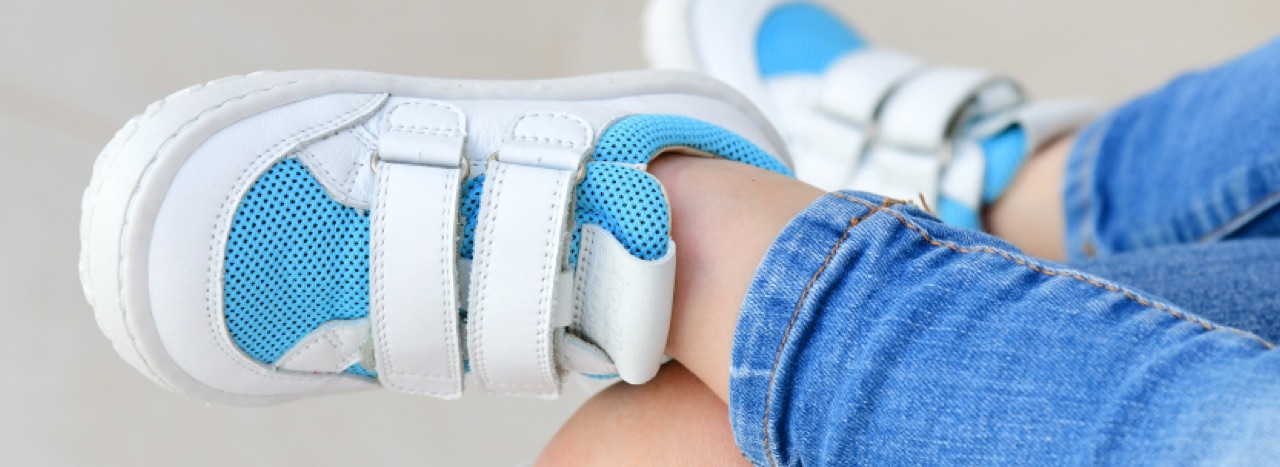
Choosing the correct shoe size is one of the most important factors in keeping children comfortable. Children’s feet grow quickly, so relying only on the size they usually wear is not always accurate.
Before buying a new pair, it is better to measure the child’s feet and compare the result with the size chart for the specific model.
Why shouldn’t you choose shoes by size number alone?
The same size can vary slightly between manufacturers in both internal length and shape.
In addition to foot length, width, toe shape, instep, the construction of the specific model, and the season all matter.
How do you measure a child’s foot correctly?
The easiest method is to have the child stand on a sheet of paper.
Feet should be measured while standing because body weight makes them slightly longer and wider.
Have the child stand barefoot or in the socks they will wear with the shoes. Mark the heel and the tip of the longest toe, then measure the distance between the two points.
Measure both feet. If one foot is slightly longer, use the larger measurement.
How much extra room should children’s shoes have?
Shoes should not fit too tightly. A small amount of extra space allows the toes to move freely while walking.
However, too much extra room can also be uncomfortable because the foot may slide inside the shoe and make walking or running less stable.
What about winter shoes?
For winter footwear, allow room for warm socks, insulated lining, heat retention, and natural toe movement.
However, buying shoes several sizes too large is not recommended.
When should you measure again?
It is especially useful to check the size before a new season, before buying winter footwear, or whenever the child says the shoes feel tight.
The right size means everyday comfort. Measure both feet before ordering and always compare the result with the size chart for the chosen model.