

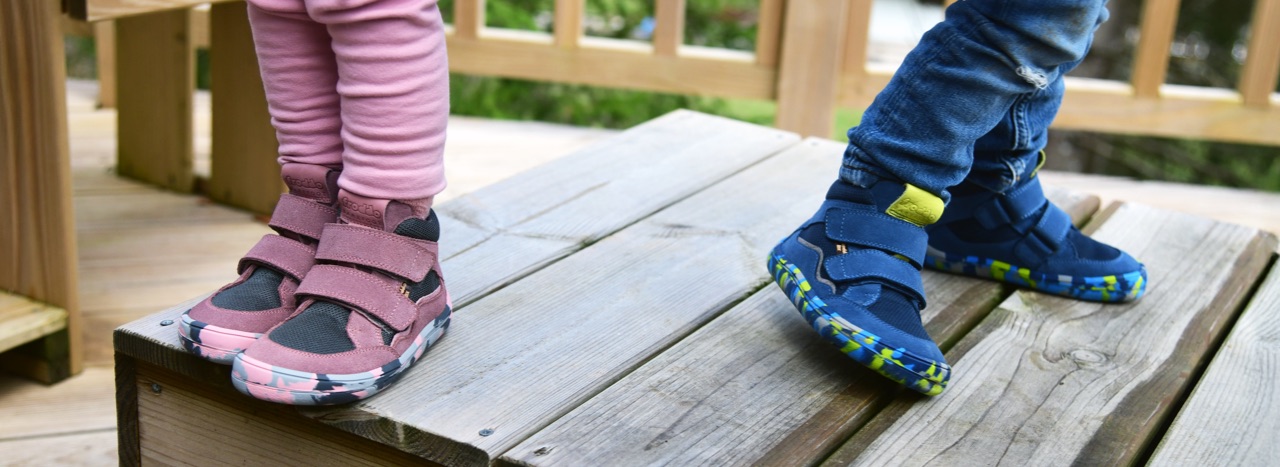
Buying a child’s first pair of shoes is an important step, and parents often have many questions: when are shoes really needed, how flexible should the sole be, how much extra room is appropriate, and how can you tell whether the shoes are comfortable?
When are first shoes needed?
If a child is only learning to stand and taking first steps at home, shoes are usually not needed all the time. On a safe surface, it can be useful for the feet to move freely.
Proper footwear becomes especially important once a child begins walking confidently outdoors and needs protection from cold, moisture, uneven surfaces, and dirt.
What should you look for?
First shoes should be lightweight, comfortable, and well matched to the shape of the child’s foot. A spacious toe box, flexible sole, and secure fastening are especially important.
The toes should not be compressed, and the heel should not keep slipping out while walking.
Why is a flexible sole important?
Shoes that are too stiff can restrict natural foot movement. A flexible sole allows the foot to bend more easily during each step and supports freer movement.
You can gently test the sole with your hands. The front part should bend without excessive force.
How do you choose the right size?
Measure both feet while the child is standing and use the longer measurement. Compare the result not only with the usual shoe size but also with the size chart of the specific brand.
A small amount of extra room is useful for toe movement and growth, but shoes that are too large can be uncomfortable and difficult to secure properly.
Which fastening is easiest?
Hook-and-loop straps are especially practical for young children. They make shoes quick to put on and allow the fit to be adjusted.
The fastening should keep the shoe secure without squeezing the foot.
A child’s first shoes should support comfortable exploration. Choose the model according to actual foot measurements, foot shape, season, and where the shoes will be worn.